
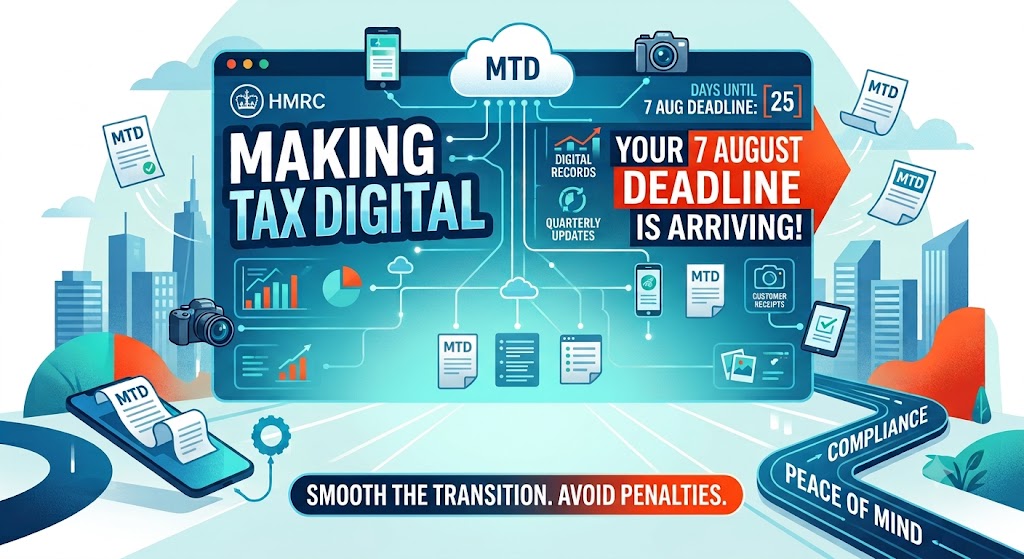
If you are a sole trader or a landlord in the UK, the way you report your income to HMRC has officially entered a new era. The days of the mad January rush to pull together twelve months of paper receipts are numbered.
Making Tax Digital (MTD) for Income Tax Self Assessment (ITSA) is here. Instead of filing one annual tax return, affected taxpayers are now required to keep digital records and submit summary updates to HMRC every three months.
Whether you are already in the first wave or preparing for the next, here is a straightforward guide to what’s changing, who it affects, and how to get ready.
The Rollout Timeline: When Do You Join?
MTD is being introduced in phases based on your gross (qualifying) income—which means your total turnover/rental income before any expenses are deducted.
| Phase | Start Date | Who It Applies To | Assessed From |
| Phase 1 | 6 April 2026 | Gross income over £50,000 | 2024/25 Tax Return |
| Phase 2 | 6 April 2027 | Gross income over £30,000 | 2025/26 Tax Return |
| Phase 3 | 6 April 2028 | Gross income over £20,000 | 2026/27 Tax Return |
Note: Partnerships, trusts, and estates are currently deferred, meaning these rules apply strictly to sole traders, freelancers, and individual landlords for now.
What Does Complying Actually Look Like?
Transitioning to MTD doesn’t change how much tax you pay, but it completely changes how and when you report it. Under the new rules, you must:
-
Keep digital records: All transactions must be recorded digitally. The shoebox of paper receipts won’t fly anymore—though you can happily snap photos of your receipts and store them digitally.
-
Send quarterly updates: Four times a year, you must submit a summary of your business income and expenses using HMRC-compatible software.
-
Submit a Final Declaration: By 31 January following the tax year, you will submit a final declaration. This pulls together your quarterly business data and any other income (like PAYE, dividends, or savings interest) to calculate your final tax bill.
-
Pay on the same schedule: Your payment deadlines do not change. You will still make your payments on account on 31 January and 31 July.
The New Quarterly Deadlines
These are reporting deadlines, not tax payment deadlines:
-
Quarter 1 (6 Apr – 5 Jul): Submission deadline is 7 August
-
Quarter 2 (6 Jul – 5 Oct): Submission deadline is 7 November
-
Quarter 3 (6 Oct – 5 Jan): Submission deadline is 7 February
-
Quarter 4 (6 Jan – 5 Apr): Submission deadline is 7 May